


Invest in Oil and Gas Companies: Risks, Rewards & Tax Advantages for the Investor
The main risks of oil and gas investment include price volatility, regulatory changes, environmental liabilities, and exploration failures. The rewards include high return potential, portfolio diversification, and income through royalties or dividends. Investors must balance risk tolerance, market timing, and sector knowledge to succeed.
Key Takeaways for Oil and Gas Investment
- Portfolio diversification benefits: Energy stocks exhibit low correlation with broader equity indices, making them valuable for risk reduction and enhanced returns
- Attractive income potential: The S&P 500 energy sector generates a 3.3% dividend yield, significantly higher than the broader market’s 1.3%
- Inflation hedge characteristics: Oil has historically demonstrated effectiveness as a hedge against inflation, preserving purchasing power during inflationary periods
- High capital intensity risks: Projects often demand initial investments running into billions of dollars, with drilling costs varying from $1 million to $50 million per well
- Substantial tax benefits: Oil and gas investments come with significant tax benefits including depletion allowances and intangible drilling cost deductions
The oil and gas investment landscape presents a complex interplay of significant risks and compelling rewards that every investor must carefully evaluate.
Understanding the oil and gas sector requires analyzing market dynamics, operational challenges, and regulatory pressures that influence investment outcomes.
This comprehensive analysis explores ways to invest in oil and gas while highlighting the risks associated with oil and gas ventures and the substantial rewards available to informed investors.
Understanding the Oil and Gas Investment Landscape
Oil and gas remain foundational pillars of the global energy system, indispensable for transportation, manufacturing, agriculture, and the chemicals industry.
Despite the burgeoning growth of renewable energy sources, global oil consumption is projected to continue rising until at least 2030.
Fossil fuels currently underpin a substantial portion of the world’s energy mix, accounting for 86% of total energy consumption.
The oil and gas industry attracts investor attention for several compelling reasons. Companies in this sector offer exposure to long-term global energy demand, particularly from rapidly expanding emerging markets.
Many oil and gas companies are known for returning significant profits to shareholders through consistent dividend payouts and share buybacks, making them appealing to income-oriented investors seeking regular returns.
When you invest in oil and gas, you gain access to an asset class that has historically served as a robust hedge against inflation. Energy costs tend to rise in tandem with broader price increases, thereby preserving purchasing power during inflationary periods.
The unique supply-driven pricing cycles, often influenced by producer alliances like OPEC+, also introduce dynamics where disciplined supply control can help protect prices and producer margins.
Oil and Gas Investing Market Dynamics and Economic Drivers
Global Oil and Gas Demand Projections
The International Energy Agency (IEA) provides authoritative forecasts on global oil markets that directly impact investment decisions. For 2025, world oil demand is projected to increase by 720 thousand barrels per day, a slight downward revision from previous estimates due to weaker deliveries in the United States and China during the second quarter.
Looking ahead to 2026, demand for oil and gas growth is expected to be marginally higher at 740 thousand barrels per day, though it will be constrained by a challenging economic outlook and increasing adoption of clean energy technologies.
Global oil demand in the fourth quarter of 2024 saw robust annual growth of 1.5 million barrels per day, the strongest level since the third quarter of 2023.
This growth was driven by factors such as lower fuel prices, colder weather in the Northern Hemisphere, and abundant petrochemical feedstocks.
These market fundamentals directly influence the profitability of oil and gas investments and affect investor returns across different investment vehicles.
Supply and Inventory Dynamics
On the supply side, global oil supply increased by 330 thousand barrels per day month-over-month in May 2025, reaching 105 million barrels per day. This represents an increase of 1.8 million barrels per day higher than a year prior.
The increase was evenly split between non-OPEC+ and OPEC+ producers, as the latter began to unwind some voluntary production cuts.
Oil inventories play a pivotal role in market sentiment and price formation, directly affecting oil and gas prices. Global oil stocks recorded a third consecutive monthly increase in April 2025, rising by 32.1 million barrels to 7,717 million barrels, largely driven by crude oil inventory builds in non-OECD countries.
Despite these recent builds, total inventories remain 90 million barrels lower year-on-year, illustrating the volatility of oil prices that investors must navigate.
Investment Rewards and Opportunities
Portfolio Diversification and Low Correlation Benefits
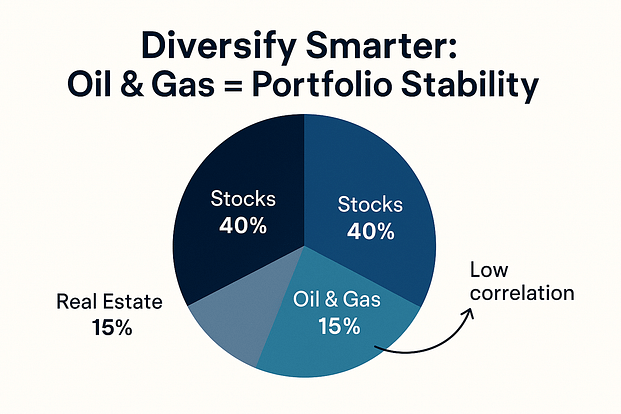
Energy stocks often exhibit low correlation with broader equity indices, meaning their performance tends to be independent of other types of stocks.
This characteristic makes oil and gas investments valuable tools for portfolio diversification, helping to reduce overall portfolio risk and potentially enhance returns by providing exposure to a sector that moves to its own rhythm.
Commodity funds, including those focused on the oil and gas sector, are generally negatively correlated with asset classes like stocks and bonds.
This negative correlation makes them effective for hedging against market downturns in other segments of a portfolio, allowing investors to maintain more stable returns during market volatility.
Income Generation and Dividend Potential
Many oil and gas companies are renowned for their strong dividend potential, returning significant profits to shareholders through regular payouts and share buybacks.
High free cash flow generation, particularly from low-cost producers, supports these steady payouts even during cyclical downturns in oil and gas markets.
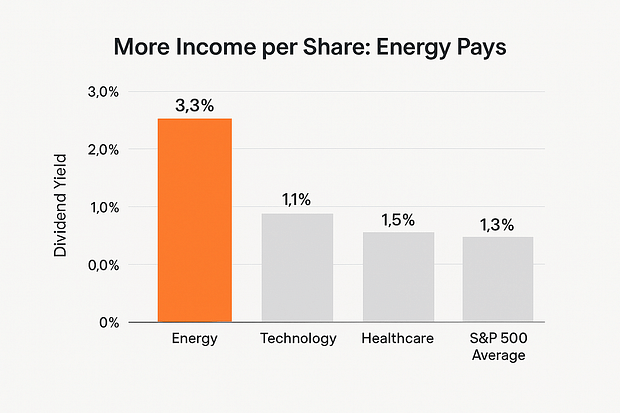
As of May 2025, the S&P 500 energy sector generated a 3.3% dividend yield, notably higher than the 1.3% for the broader S&P 500. Midstream energy companies, which focus on transporting crude oil and refined products, offer even more attractive yields, averaging 7.0%.
This income profile appeals to investors seeking regular returns from their investments in oil and gas.
| Company | Forward Dividend Yield |
|---|---|
| Energy Transfer (ET) | 7.56% |
| ONEOK (OKE) | 5.10% |
| NOV (NOV) | 3.92% |
| ExxonMobil (XOM) | 3.65% |
| ConocoPhillips (COP) | 3.36% |
| SLB (SLB) | 3.32% |
| Devon Energy (DVN) | 2.93% |
| Occidental Petroleum (OXY) | 2.20% |
Tax Advantages and Benefits
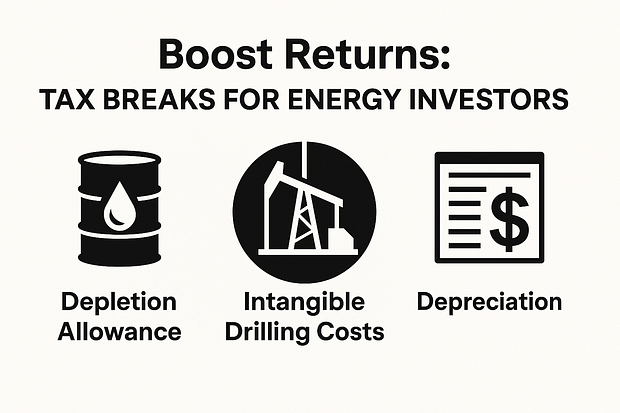
Investments in oil and gas come with significant tax benefits that enhance overall returns for investors. These substantial tax benefits include depletion allowances, intangible drilling cost deductions, and depreciation allowances that can substantially reduce taxable income.
The tax advantages of oil and gas investments make them particularly attractive to high-income investors seeking to optimize their tax burden while gaining exposure to energy markets.
Oil and gas operations benefit from unique tax provisions that allow investors to deduct a percentage of gross income from oil and gas production through depletion allowances.
Additionally, intangible drilling costs, which can represent 60-80% of total drilling expenses, are often fully deductible in the first year, providing immediate tax relief for qualified investors.
Understanding Investment Risks Associated With Oil and Gas
Financial and Operational Risks
The oil and gas industry is profoundly capital-intensive, requiring substantial financial resources across its entire value chain, from exploration to decommissioning. Projects often demand initial investments running into billions of dollars for activities such as extracting oil and gas, upgrading bitumen, refining crude oil, and transporting products.
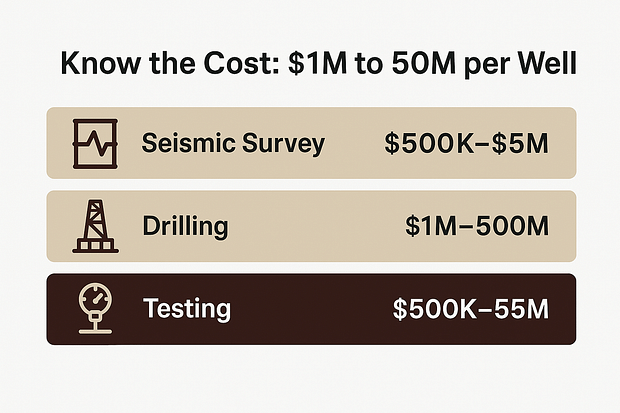
During the exploration phase, key financial obligations include seismic survey costs ranging from $500,000 to $5 million per survey, and drilling costs varying from $1 million to $50 million per well.
Testing and evaluation activities further add to these expenses, typically costing between $500,000 and $5 million per well. These substantial capital requirements underscore the risks associated with investing in oil and gas ventures.
Oil and gas extraction activities carry the potential for significant damage to property and the environment, as well as injury and fatalities, particularly if not adequately controlled, monitored, or regulated.
Common safety hazards include vehicle collisions, which are the leading cause of fatalities for oil and gas extraction workers in the United States, accounting for roughly four out of ten on-the-job deaths.
Market Volatility and Price Risk
The volatility of oil prices represents one of the most significant risks for oil and gas investors. In the first half of 2025, crude oil prices experienced significant fluctuations, surpassing $80 per barrel in mid-January, dropping below $60 per barrel by early May, and then rebounding to $74 per barrel by mid-June following the Israel-Iran conflict.
Market fluctuations, especially in oil prices, significantly impact capital requirements and profitability within the industry. Changes in oil prices directly affect revenue and cash flow, influencing capital expenditures and investment decisions, as well as the effectiveness of financial hedging strategies and risk management practices.
The inherent volatility in commodity markets means that companies must be prepared to adjust their financial planning in response to unpredictable price swings.
Geopolitical and Regulatory Risks
Energy supply security is intrinsically linked to political stability, creating risks associated with oil and gas investments in volatile regions. Many significant oil and gas reserves are located in regions prone to diplomatic or military conflicts.
The Russia-Ukraine conflict profoundly disrupted European gas supplies, leading to price spikes and a reevaluation of energy dependencies.
The United States has escalated pressure on Russia’s energy sector through extensive sanctions targeting major oil producers like Gazprom Neft and Surgutneftegas, along with over 180 vessels in Russia’s “shadow fleet.”
These actions have redirected Russian oil exports primarily to non-Western buyers, with India and China emerging as dominant importers, affecting global oil and gas supply chains.
Governments worldwide are implementing increasingly stringent carbon disclosure requirements and energy transition frameworks that directly impact the financing, reporting obligations, and future viability of upstream projects.
These regulations represent evolving challenges within the oil and gas regulatory environment that investors must monitor closely.
Types of Oil and Gas Investment Vehicles
Direct Equity Investments in Oil and Gas Companies
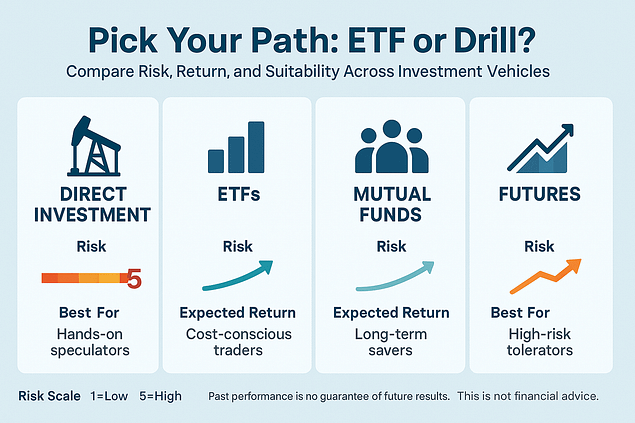
Direct equity investments involve purchasing shares of oil and gas companies, ranging from exploration and production firms to integrated oil companies. Investors can also participate more directly by purchasing mineral rights, leasing land, or joining drilling partnerships in oil and gas wells.
This investment vehicle offers potential for high returns, particularly if a drilling operation strikes significant reserves. Direct equity provides exposure to oil and gas prices, allowing investors to benefit from rising commodity values.
However, this approach carries extremely high risk due to the speculative nature of drilling and the substantial upfront capital required for oil and gas operations.
Exchange-Traded Funds (ETFs) for Energy Exposure
ETFs are pooled investment products that provide investors with exposure to the oil and gas sector without directly owning individual stocks or oil futures contracts. They offer liquidity as they trade on stock exchanges and are generally overseen by professional managers, making them accessible ways to invest in oil and gas markets.
Commodity-based ETFs typically invest in a basket of natural gas or crude oil futures contracts, rather than holding physical commodities directly. Their objective is to track the spot price of the commodity or a specific commodity index.
Examples include the United States Oil Fund LP (USO) for WTI crude, the United States Natural Gas Fund LP (UNG) for natural gas, and the United States Brent Oil Fund LP (BNO) for Brent crude.
Oil Futures Contracts and Derivatives
Oil futures contracts are legal agreements to buy or sell oil at a predetermined price on a specified future date. These contracts are standardized and traded on futures exchanges, offering direct exposure to commodity price movements in the trading of oil and gas markets.
Futures contracts offer high leverage, meaning a small initial investment can control a large amount of a commodity, leading to potential for significant returns if oil prices move favorably. Producers and consumers also use futures to hedge against price changes, locking in future selling or buying prices for crude oil and natural gas.
However, futures trading is extremely high risk due to the leverage involved and the rapid fluctuations in commodity prices. It requires advanced knowledge of derivatives, market timing, margin requirements, and expiration dates, making it suitable only for experienced investors with very high risk tolerance.
ESG Factors and Long-Term Viability
Environmental, Social, and Governance (ESG) principles have transitioned from external considerations to fundamental drivers of strategy in the oil and gas sector. This shift is driven by escalating regulatory pressure, investor demands, and civil society expectations, making ESG integration a strategic imperative for long-term viability of investments in the sector.
ESG factors are increasingly integrated into investment decisions and are critical indicators of a company’s long-term viability and reputation. Investors are prioritizing sustainable and responsible investments, leading to greater scrutiny and demands for transparency and accountability from energy companies.
Companies that demonstrate strong commitment to ESG principles are more likely to attract and retain socially responsible investors and gain competitive advantages in evolving markets.
Major oil and gas companies are actively integrating ESG principles into their strategies through emission reduction targets, energy diversification, and investments in carbon capture, utilization, and storage (CCUS) technologies.
For example, Shell, TotalEnergies, and Equinor have jointly invested $714 million to expand the Norwegian “Northern Lights” CCUS project, aiming to triple its storage capacity to approximately 5 million tons of CO₂ per year by 2028.
Investment Strategies and Risk Management
Balanced Portfolio Construction Approaches
Given the sector’s low correlation with broader markets and its inflation-hedging capabilities, a measured allocation to oil and gas can enhance portfolio diversification. Successful investment strategies focus on companies with strong balance sheets, disciplined capital allocation strategies, and proven track records of operational efficiency.
Midstream companies, less directly exposed to commodity price volatility, may offer more stable income streams compared to upstream exploration and production companies.
These companies transport crude oil and refined products, providing essential infrastructure services that generate consistent cash flows regardless of short-term price fluctuations in oil and gas prices.
Managing Geopolitical Exposure
Oil and gas companies have developed various strategies to manage geopolitical risks, including divorcing ownership control from operating control in collaborative ventures, proactively managing stakeholder relationships, ensuring transparency and communication, and diversifying risks across multiple regions and projects.
By improving risk management capabilities, companies can better protect their assets, reduce potential losses, and maintain competitive positions in volatile global markets.
This proactive approach to risk management is becoming essential for companies across all industries in the shifting global political landscape affecting oil and gas supply chains.
Evaluating Tax Benefits of Oil and Gas Investments
The tax benefits of oil and gas investments represent a significant advantage for qualified investors. These investments typically offer substantial tax benefits through various mechanisms including percentage depletion allowances, intangible drilling cost deductions, and depreciation schedules that can significantly reduce current-year tax obligations.
Gross income from oil and gas production may qualify for percentage depletion deductions, allowing investors to deduct a percentage of their income from oil and gas operations. Working interest in oil and gas wells may also provide additional tax advantages, particularly for active participants in drilling and production activities.
Long-Term Outlook and Energy Transition
Future Demand Projections
Major energy organizations offer varying long-term projections for oil and gas demand that influence investment strategies. The IEA projects that demand for coal, oil, and natural gas will each peak before 2030 under all its scenarios, with coal demand beginning to decline around 2025, while oil and gas demand will peak toward the end of the decade.
Shell’s 2025 Energy Security Scenarios suggest that oil demand is likely to grow by 3-5 million barrels per day into the early 2030s, followed by a long but slow decline.
Natural gas demand could grow by approximately 500 billion cubic meters per annum, reaching around 4,640 billion cubic meters in 2040, with LNG accounting for 20% of this growth.
ExxonMobil forecasts global energy demand to continue growing through 2040, driven by population and economic expansion, particularly in emerging markets.
The company’s analysis suggests that oil and natural gas will remain important energy sources, with 10 out of 13 assessed 2°C scenarios projecting that they will still supply over 50% of global energy by 2040.
Technology and AI Impact on Energy Markets
Artificial intelligence is poised to significantly shape the future energy system and influence investments in oil and gas. AI’s impact on the energy system could lead to increased disruptions, as technological change tends to move at a faster pace than energy system transformations.
The integration of AI could spark more rapid uptake of electric vehicles by enabling system efficiencies in autonomous traffic environments. A managed EV system could allow the inherent battery storage in vehicles to contribute to electricity grid storage and flexibility requirements, thereby hastening the journey to a renewable-only electricity system.
Way To Invest in Oil and Gas industry -Investment Vehicle Analysis
Direct Investment Considerations
Direct participation in oil and gas involves purchasing mineral rights, leasing land, or joining drilling partnerships in oil and gas wells. This investment vehicle offers potential for high returns, particularly if drilling operations strike significant oil reserves.
Direct investment provides immediate exposure to oil and gas prices, allowing investors to benefit directly from rising commodity values.
However, direct investments carry extremely high risk due to the speculative nature of drilling and substantial upfront capital required. Returns can take a long time to materialize, and companies may overemphasize potential returns while downplaying risks.
Some private deals might include “front-end loads” where companies profit primarily from placing investor money rather than project success.
Mutual Funds and Professional Management
Energy mutual funds represent professionally managed portfolios that invest in diversified baskets of securities related to the oil and gas industry.
These funds provide diversification across multiple companies and offer professional management, making it easier for investors to navigate the complex energy market without requiring deep industry expertise.
These investment vehicles can be structured as equity funds investing in energy company stocks, debt funds investing in energy company bonds for regular income, or allocation funds with varying mixes of equity and fixed income.
They can also be categorized by market capitalization of the companies they target, from large-cap integrated oil companies to small-cap exploration firms.
Risk Management and Mitigation Strategies
Operational Risk Assessment
Understanding the oil and gas industry presents unique operational challenges that investors must evaluate. The industry faces significant safety hazards including vehicle collisions, explosions, fires, and exposure to high-pressure equipment.
These operational risks can result in substantial financial losses, regulatory penalties, and reputational damage that directly impact investment returns.
Supply chain fragility represents another critical risk factor within the oil and gas value chain. Despite advancements in digital technologies, the sector remains highly susceptible to disruptions from infrastructure bottlenecks, port delays, and concentrated supplier networks that can lead to operational inefficiencies and cost volatility.
Cybersecurity and Digital Threats
The increasing reliance on digital systems and interconnected infrastructure introduces new vulnerabilities to cyber threats that affect oil and gas operations. As control systems, production sites, and trading platforms become more digitized, the potential attack surface expands significantly.
The consequences of data breaches, system failures, or cyber-attacks can be severe, leading to financial losses, reputational damage, and widespread operational disruptions such as pipeline shutdowns or manipulation of pricing data.
These risks are becoming increasingly systemic and costly, necessitating robust cybersecurity measures from companies in which investors place capital.
Making Oil and Gas Investment Decisions
Evaluating Company Fundamentals
When interested in investing in oil and gas, investors should prioritize companies with strong balance sheets, disciplined capital allocation strategies, and proven track records of operational efficiency.
Companies that invest early in automation, artificial intelligence, and advanced analytics often demonstrate superior capital discipline and adaptability, translating into stronger fundamentals over time.
Digital transformation enables firms to reduce downtime, cut operational costs, and improve safety standards. Digital tools such as emission sensors, satellite monitoring, and AI modeling are being deployed to track and manage environmental risks more accurately, supporting compliance with evolving climate regulations and improving ESG reporting.
Assessing Investment Alignment
Oil and gas investments align with different investor profiles and risk tolerances. Conservative investors might focus on established integrated oil companies with diversified operations and strong dividend histories.
More aggressive investors might consider exploration and production companies or direct participation in drilling ventures for potentially higher returns.
The success of oil and gas investments depends largely on timing, market conditions, and careful selection of investment vehicles. Investors must evaluate whether their investment timeline, risk tolerance, and portfolio objectives align with the cyclical nature and inherent volatility associated with investing in this sector.
Monitoring Market Cycles
The oil and gas sector broadly mirrors global business cycles with distinct phases driven by supply, demand, and crude oil inventory interactions. Understanding these cycles helps investors time their entry and exit points more effectively.
The generic energy cycle includes four phases: bounce (when time spreads bottom near peak inventories), stability (gradual inventory reduction), euphoria (supply/demand tightness with time spread breakouts), and crash (excess supply returns, pushing markets back into contango).
Current market observations suggest energy equities have recently outrun crude oil prices, indicating potential divergence that may need reconciliation.
Environmental and Social Considerations
Greenhouse Gas Emissions and Climate Impact
The oil and gas industry faces increasing scrutiny regarding greenhouse gas emissions and environmental impact. Major companies are implementing emission reduction targets, with most leading firms committing to achieving carbon neutrality by 2050 with intermediate milestones.
For example, Equinor aims to reduce operational emissions by 50% by 2030 compared to 2015 levels, having already achieved a 34% reduction by the end of 2024.
BP targets a 45-50% reduction in operational emissions by 2030 from a 2019 baseline, reporting a 38% reduction by 2024. These commitments affect long-term viability and investor perception of oil and gas companies.
Regulatory Compliance and Future Outlook
Entering the oil and gas investment arena requires understanding evolving regulatory landscapes. Governments worldwide are implementing stringent carbon disclosure requirements and energy transition frameworks that directly impact financing, reporting obligations, and future viability of upstream projects.
The landscape of oil and gas investing is increasingly influenced by climate-linked financial risks that extend beyond traditional taxation or licensing issues.
Companies must navigate complex regulatory environments while maintaining profitability, creating ongoing challenges for investors evaluating long-term prospects in traditional oil and gas operations.
Strategic Investment Recommendations
Portfolio Allocation Strategies
Oil and gas investments may serve as strategic portfolio components when properly sized and managed. The role in the oil and gas sector within a diversified portfolio should reflect individual risk tolerance, investment timeline, and income requirements while acknowledging the sector’s unique characteristics and cyclical nature.
Successful investing in this sector means understanding that oil and gas involves understanding multiple risk factors including commodity price volatility, operational hazards, regulatory changes, and geopolitical tensions.
Investors should consider these factors when determining appropriate allocation percentages and investment vehicles.
Due Diligence Requirements
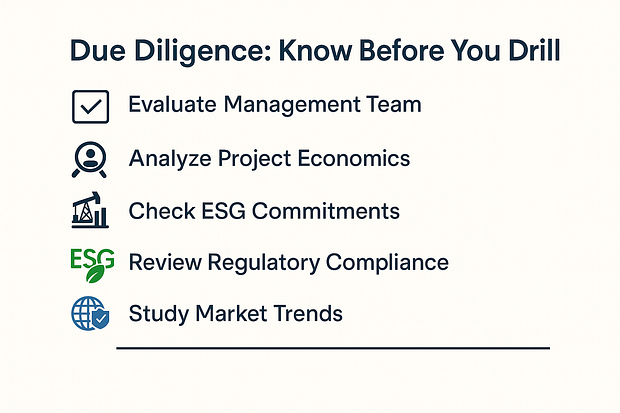
Participation in oil and gas investments requires thorough due diligence including evaluation of management teams, project economics, regulatory compliance, and competitive positioning. Investors should assess companies’ genuine commitment to ESG principles, including verifiable emission reduction targets, investments in renewable energy and CCUS technologies, and transparent governance structures.
Understanding the oil and gas investment process involves analyzing financial statements, production profiles, reserve estimates, and capital allocation plans.
Investors must also evaluate the effects on oil and gas markets from global economic trends, technological developments, and policy changes that influence long-term sector prospects.
Conclusion
Oil and gas sector provides compelling investment opportunities for investors seeking portfolio diversification, income generation, and inflation protection. The sector offers substantial tax benefits and the potential for attractive returns, particularly for investors who understand market dynamics and company fundamentals.
However, oil and gas investments depends on careful risk assessment and strategic planning. The capital-intensive nature of the industry, combined with price volatility, operational hazards, and evolving regulatory environments, requires sophisticated analysis and ongoing monitoring.
As the global energy transition accelerates, successful oil and gas investing requires balancing current income and growth opportunities with long-term sustainability considerations.
Investors must evaluate how their investment strategies align with changing market conditions, technological developments, and policy frameworks that will shape the future landscape of oil and gas markets.
The oil and gas sector presents both significant opportunities and substantial risks that demand careful consideration. By understanding market dynamics, evaluating company fundamentals, and implementing appropriate risk management strategies, investors can make informed decisions about their participation in this critical but evolving energy sector.