




The Complete Guide to Oil and Gas Production Basics: Understanding the Industry Essentials
Introduction to Oil and Gas
The oil and gas industry forms one of the largest sectors in the world economy, providing essential energy resources that power modern civilisation. Oil and gas production involves complex processes that transform underground resources into usable energy products.
This comprehensive guide explores the fundamental aspects of how petroleum and natural gas are discovered, extracted, and processed.
Oil and gas remain the primary energy source for most countries despite the growing importance of renewable energy alternatives. Understanding the basics of oil and gas production provides valuable insights into this crucial industry that affects virtually every aspect of daily life, especially if you are considering investing in oil and gas wells.
The Origins and Formation of Oil and Gas Resources
Oil and gas resources originate from organic materials deposited millions of years ago. These hydrocarbons formed through the decomposition of ancient marine organisms under specific conditions of heat and pressure. The basic formation process includes:
- Deposition of organic material in oxygen-poor environments
- Burial under layers of sediment
- Transformation into kerogen through heat and pressure
- Conversion of kerogen into crude oil and natural gas
Oil was formed primarily from marine plankton, while natural gas comes from both plant and animal matter. These resources accumulated in porous rock formations called reservoirs, where they remain trapped until production.
Types of Oil and Gas Deposits
The industry distinguishes between several types of petroleum deposits:
| Deposit Type | Description | Extraction Complexity |
| Conventional oil | Liquid petroleum found in permeable rock formations | Lower |
| Unconventional oil | Oil trapped in less permeable formations | Higher |
| Oil sands | Heavy oil mixed with sand and clay | Higher |
| Oil shale | Fine-grained sedimentary rock containing kerogen | Higher |
| Natural gas reserves | Gaseous hydrocarbons in underground formations | Moderate |
| Shale gas | Natural gas trapped within shale formations | Higher |
The distinction between conventional and unconventional resources relates primarily to the recovery methods required. Traditional oil and gas deposits flow more readily, while unconventional resources require advanced technologies to extract.
Oil and Gas Exploration: Finding Promising Reserves
The first stage of oil and gas production involves identifying potential oil and gas deposits. Exploration teams employ sophisticated techniques to locate promising reservoir formations:
- Geological surveys to identify rock formations likely to contain hydrocarbons
- Seismic imaging that creates detailed underground maps
- Exploratory drilling to confirm the presence of oil or gas
- Well testing to determine the amount of oil or quantities of oil and gas available
Oil exploration represents a significant investment, with companies carefully analysing geological data before committing to drill. Industry experts use advanced computer modelling to identify the most promising locations for potential oil and gas reserves.
Assessing Oil and Gas Reserves
Once discovered, companies must evaluate how much oil or natural gas a site contains. The industry classifies reserves according to the likelihood of successful extraction:
- Proved reserves: At least 90% probability
- Probable reserves: At least 50% probability
- Possible reserves: At least 10% probability
This classification helps oil and gas companies make informed investment decisions about which reserves to develop first. The U.S. and other major economies maintain strategic oil reserves to ensure energy security during supply disruptions.
Drilling: The Foundation of Extraction
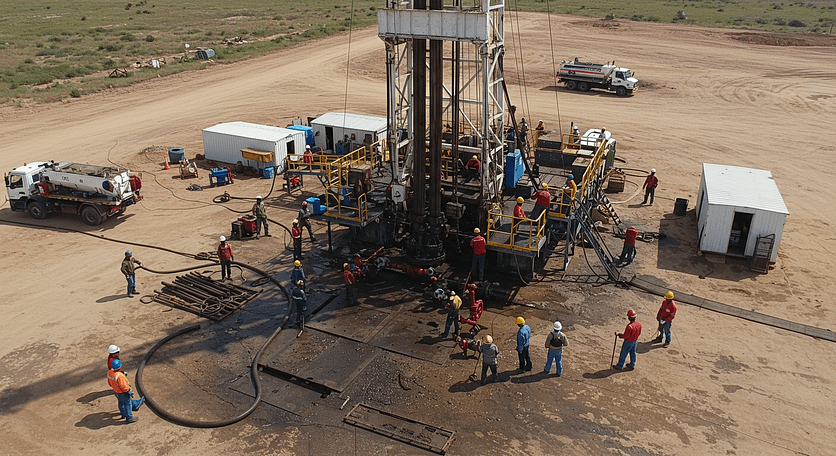
The drilling process forms the backbone of oil and gas extraction. Modern drill operations employ sophisticated equipment to reach depths of several kilometres. The basic steps include:
- Setting up the drilling rig
- Drilling the initial section of the well
- Installing protective casing
- Drilling to the target depth
- Evaluating the well’s production potential
Traditional vertical wells drill straight down to reach oil or gas reservoirs. However, advances in technology have enabled horizontal drilling, which extends laterally through a reservoir formation, significantly increasing production capabilities.
Advanced Drilling Technologies
The petroleum sector continuously develops more efficient drilling methods:
- Horizontal drilling allows access to larger portions of a reservoir
- Extended reach drilling permits access to reserves far from the drill site
- Multilateral drilling creates multiple branches from a single well
- Underbalanced drilling reduces formation damage and improves productivity
These technological innovations help extract fossil fuels from previously inaccessible rock formations, extending the production capacity of existing oil fields.
Hydraulic Fracturing: Unlocking Unconventional Resources
Hydraulic fracturing, commonly known as “fracking,” revolutionised the oil and gas industry by enabling the acquisition of resources from tight shale formations. This process involves:
- Drilling a well into rock formations
- Injecting high-pressure fluid (water, sand, and chemicals)
- Creating fractures that allow oil or gas to flow more freely
- Capturing the released hydrocarbons
While controversial due to environmental concerns, hydraulic fracturing has dramatically increased production capabilities, particularly in shale gas development. This technique has transformed countries like the U.S. into major gas producers.
Upstream Production: From Well to Processing
Upstream operations encompass all activities from finding reserves to extracting raw hydrocarbons. The production process begins once drilling confirms commercially viable quantities of oil or gas. Production wells extract these resources through several mechanisms:
- Natural pressure that forces oil or natural gas deposits to the surface
- Artificial lift systems (pumps) when natural pressure depletes
- Enhanced oil recovery techniques for mature fields
Production equipment at the wellhead separates the initial mixture of oil, gas, and water. The extracted crude oil and natural gas then move to processing facilities via pipeline or transport vehicles.
Production Challenges and Solutions
Fossil fuel extraction faces numerous technical challenges:
- Maintaining optimal flow rates from the reservoir
- Managing pressure to prevent damage to the formation
- Dealing with water or gas intrusion into the well
- Preventing equipment corrosion and failure
To address declining production in mature wells, companies employ enhanced oil recovery methods such as gas injection, chemical injection, or thermal recovery to stimulate additional output.
Reservoir Management: Maximising Resource Recovery
Effective reservoir management ensures maximum recovery of oil and gas resources. Engineers continuously monitor production data to optimise acquisition strategies. Key aspects include:
- Pressure maintenance to support efficient flow
- Water and gas management to prevent early production decline
- Production rate optimisation to prevent reservoir damage
- Data analysis to identify improvement opportunities
Through careful reservoir management, companies can significantly increase the total amount of oil and gas recovered from a deposit, sometimes doubling the initial production estimates.
Stages of Oil and Gas Field Development
Oil field development typically progresses through several distinct stages:
- Initial production with high natural flow rates
- Peak production as operations reach optimal capacity
- Plateau production maintaining stable output
- Decline phase as reservoir pressure decreases
- Late-life operations using enhanced recovery techniques
Each stage requires different production strategies and equipment to maximise efficiency. The guide to oil and gas field management emphasises adapting techniques to match the current production phase.
The Environmental Impact of Oil and Gas Production
The processes involved in oil collection and production create significant environmental challenges:
- Greenhouse gas emissions from production activities and fuel combustion
- Potential water contamination from drilling fluids or spills
- Land use changes and habitat disruption
- Air quality impacts from processing facilities
The industry has implemented various measures to reduce these impacts, including improved drilling techniques, better containment systems, and gas capture technologies. The balance between energy needs and environmental protection remains a central challenge for the petroleum industry.
Transition to Renewable Energy
While oil and gas remain essential, the industry also participates in the transition toward more sustainable energy sources:
- Investment in renewable energy projects
- Development of lower-carbon fuels
- Carbon capture and storage technologies
- Improved efficiency to reduce overall emissions
Many petroleum companies now view themselves as broader energy providers, expanding beyond their traditional focus on hydrocarbon collection.
Global Oil and Gas Industry: Key Players and Markets
The petroleum sector influences the global economy through its extensive supply chains and market dynamics. Major oil-producing regions include:
- Middle East (Saudi Arabia, UAE, Iran)
- North America (U.S., Canada, Mexico)
- Russia and Central Asia
- Latin America (Brazil, Venezuela)
- West Africa (Nigeria, Angola)
These producers and consumers of oil operate within a complex market where prices fluctuate based on supply, demand, geopolitical factors, and economic conditions. Large integrated oil companies manage everything from exploration to retail, while smaller firms specialise in specific segments of the value chain.
Conclusion: The Future of Oil and Gas Production
The oil and gas industry continues to evolve in response to technological innovation, environmental concerns, and changing energy demands. While renewable energy gains importance, petroleum products remain critical for transportation, manufacturing, and electricity production.
Understanding the basics of fossil fuel production provides valuable context for broader energy discussions. As the world navigates the balance between energy security, economic development, and environmental sustainability, the knowledge of how these vital resources are produced becomes increasingly important.
The industry faces significant challenges, from accessing increasingly difficult reserves to addressing climate change concerns. However, the fundamental processes of exploring, drilling, and producing oil and gas will continue to power global development for decades to come, even as the energy landscape gradually transforms.